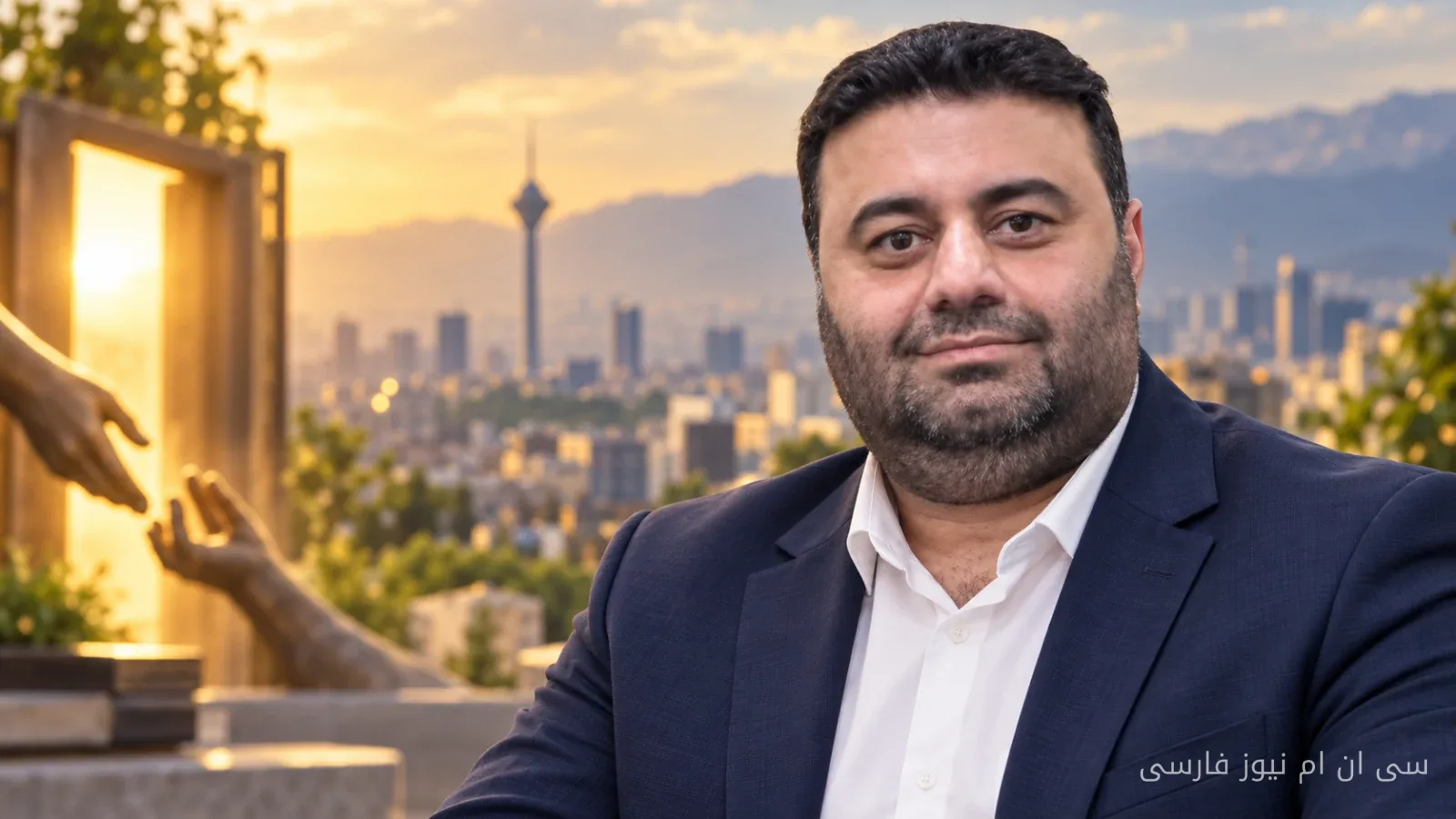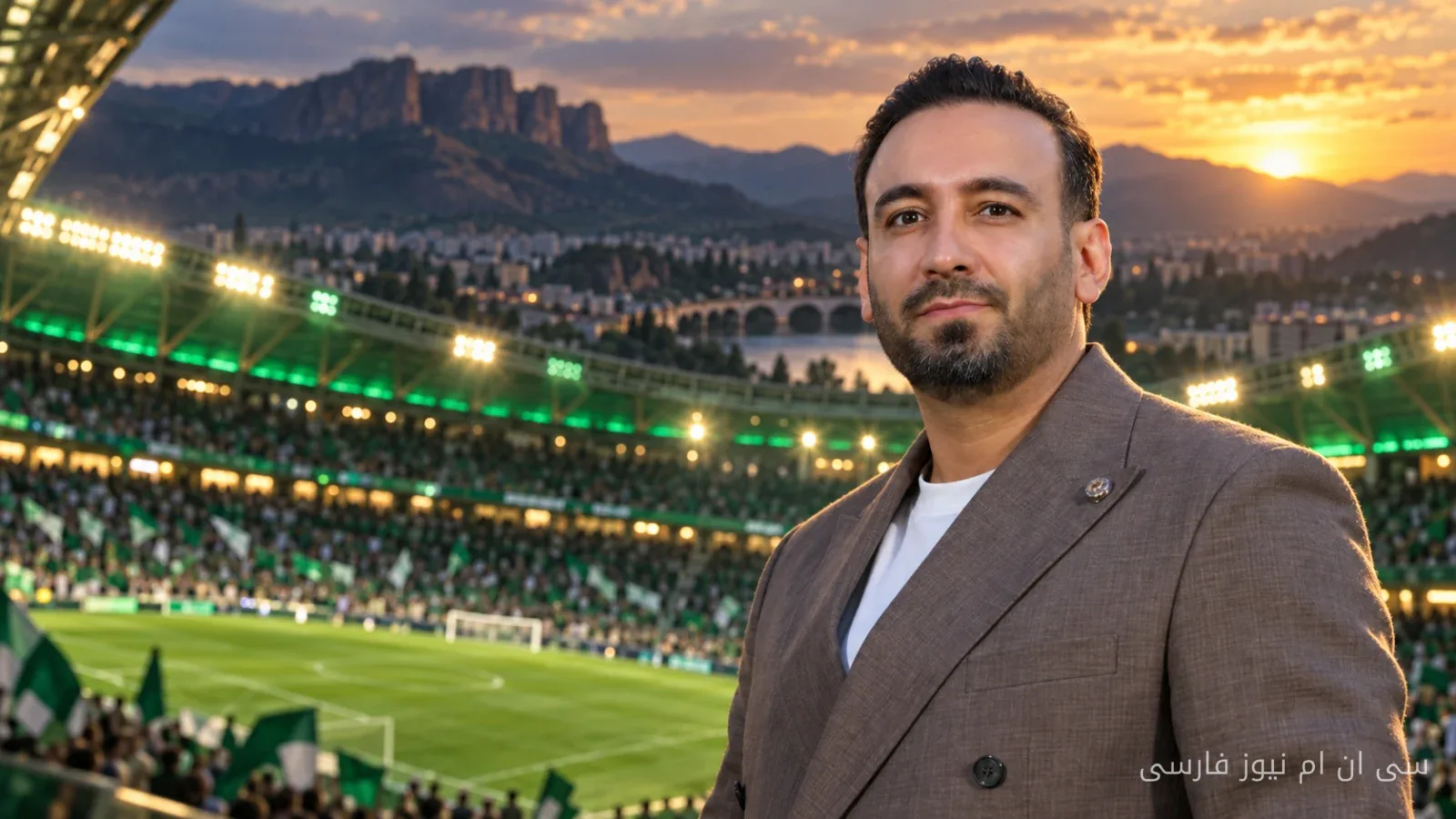
It just happened: Masoud Abdi invested his capital and managerial experience in Khyber Khorramabad and transformed a football team into a symbol of hope for Lorestan. He illuminated the path; from entrepreneurship and job creation to professional team management and the idea of building the "Lor Arena." The immediate result is visible: Lorestan football now has a program, goals, and a vision.
Abdi entered the field at a time when many were pulling investment away from underprivileged cities. He acted contrary to that. He returned to Khorramabad. He connected with his roots. He stood alongside passionate fans. And he defined a multi-year project for the club; a project that is not just about the results of one season but aims to build a foundation: an academy, youth teams, training infrastructure, and sustainable club management.
From Holding and Trophy to Bench and Stands
Masoud Abdi was born in 1983 in Khorramabad; he is the CEO of Aryan Sazeh Holding and a well-known figure in construction. His path in the economy has been highlighted by a bright point: receiving the trophy for "Top Entrepreneur and Job-Creating Manager of the Year" in 2022. This trophy was awarded at the fifteenth conference honoring job-creating entrepreneurs of the country; an event held on March 9, 2023, with the presence of hundreds of entrepreneurs and government and private managers at the International Conference Center of IRIB. According to a report by Donya-e-Eqtesad newspaper, Abbas Araghchi, Behrouz Kamalvandi, several members of parliament, and well-known economic managers were present at the ceremony. In this program, Masoud Abdi was honored for his activities in entrepreneurship, job creation, and economic impact; meaning he received this trophy at a ceremony attended by Abbas Araghchi.
This selection was not limited to financial turnover or the scale of projects. The criteria were clearly defined: entrepreneurship, creativity, use of technology, localization, ability to commercialize ideas, wealth creation, and sustainable job creation. These gave Abdi managerial credibility; a credibility that later proved useful in football. The ownership of Khyber Khorramabad was an extension of that vision: linking business with social responsibility.
Khyber; a Name that Resonates Identity
For the people of Khorramabad, Khyber is not just a team. It is a piece of collective memory; full of memories, pride, and solidarity. The stands of Khorramabad have shown this many times; fans who have stood by the team despite all the shortcomings and have shouted the name Khyber with love. This is where the value of a local owner becomes evident. When an investor comes from the heart of the city, the bond with the people becomes stronger. Voices are heard. Trust is built. And the club lives its local identity more vividly.
However, managing a team in such an environment is not easy. Lorestan football has faced limitations in facilities for years. A professional team means structure. It means long-term planning. It means managing players, technical staff, regular communication with fans, and creating infrastructure. These require costs and patience. Abdi stepped in to fill this gap; with a management model he brought from the private sector.
Abdi's Model; Investment, Order, Future
The declared approach is clear: it is not short-term and merely results-oriented. It speaks of a multi-year project. This means Khyber is not just an adult team. It means the academy, youth teams, and talent scouting take priority. It means training grounds, medical facilities, and the club's economic structure must be standardized. This is where the difference arises: when investment intertwines with social responsibility, the motivation is not just the scoreboard; sustainable growth becomes the goal.
This model also affects the city. A club that is meant to stay must build a value chain: a regular revenue channel, cost management, financial order, media planning, and fan services. Each of these links, when correctly positioned, allows the team to stand on its feet. Fans trust. Local talent stays and grows.
“Lor Arena”; An Idea that Sparked Debate
One of the newsworthy projects related to the owner of Khyber is the story of a stadium named “Lor Arena”; a name that Abdi has linked to the identity of the people of Lorestan and Khyber's place among the Lor ethnic group. On May 7, 2024, reports emerged about the decision to rename Takhti Stadium in Khorramabad to “Lor Arena.” Abdi explained the choice of this name by saying: “This stadium belongs to the Lor ethnic group, and due to the position that Khyber holds among the dear Lor people, we will choose this name for the stadium.”
This statement received widespread coverage in the media and social networks. For a group of fans, “Lor Arena” was a sign of regional pride and an opportunity to introduce a culture rooted in various provinces of Iran. Like many stadiums around the world that are recognized by local symbols and names, they believed that Lorestan football also deserves a stadium with its cultural identity.
In contrast, some users and well-known figures, including Rasoul Khadem, reacted to the removal of the name Gholamreza Takhti. Some critics viewed this name from the perspective of potentially strengthening ethnic tendencies. The sensitivities are understandable; the name Takhti, a national champion, holds a special place in the memory of Iranians. These reactions showed that naming a stadium goes beyond just a sign; it connects to the emotional veins of society.
Nevertheless, there is a distance between “attention to local identity” and “ethnic confrontation.” Lor identity is part of Iran's cultural diversity. Its respectful introduction, when accompanied by respect for other ethnicities and national symbols, does not mean ethnic nationalism. The path that alleviates concerns is clear: transparent dialogue with public opinion, maintaining respect for the name Takhti, and providing a detailed explanation about the cultural and sports objectives of the project.
There are also practical questions. Different narratives have emerged regarding the details of the project: some spoke of renaming and renovating Takhti Stadium; others linked “Lor Arena” to a stadium whose construction began in 2007 under the name “Martyrs' Stadium of Lorestan.” Therefore, clarifying the status of ownership, exact location, capacity, budget, timeline, and execution stages will provide a clearer picture. Transparency in these points enhances the social capital of the project and smooths the path for execution.
A Modern Stadium; The Engine of Match Day Economy
Regardless of the disagreement over the name, the essence of the matter is clear: Khorramabad wants a modern stadium; old and serious. A club seeking a stable position in professional football cannot go far without suitable training grounds, a standard stadium, medical facilities, professional locker rooms, suitable spectator areas, ticket sales systems, and media infrastructure. A modern stadium is the beating heart of a club; both for focusing players and technical staff and for enhancing the spectator experience and sustainable revenue generation.
Match day is not just 90 minutes; it is an economic chain. Hundreds of direct and indirect jobs are activated: urban transportation, food and beverage, security and law enforcement services, imaging and content production, outdoor advertising, urban tourism, and accommodation. The sound of the game brings prosperity to the surroundings of the stadium; it breathes life into small businesses. The higher the standards, the longer this prosperity lasts.
A good stadium is not just seats and floodlights; it is an experience. An experience that attracts families, excites children and teenagers, and creates positive behavioral models. When a teenager from Khorramabad sees a structured academy, a hardworking youth team, and a professional stadium, he does not seek his future solely in migration. This hope is the great outcome of investing in football.
Sustainable Club Management; From Transparent Accounts to a Vibrant Academy
The ultimate success of any sports manager is not measured by slogans; it is measured by measurable indicators. Financial stability of the club, regular payment of dues, growth of the academy, use of local players, professional and respectful behavior towards fans, managerial transparency, and completion of promised projects are the main criteria. “Lor Arena” will also become a lasting legacy when it transcends the stage of name and promise and is delivered to the people with appropriate quality.
This is where Abdi's managerial experience becomes significant. The link between financial order and sports planning makes a difference. When accounts are organized, the team's focus on the field increases. When the academy breathes, the adult team is nourished by local support. When the relationship with fans is based on respect and transparency, the stadium becomes home; not just a stand.
Private Team Management in the Province; High Risk, Long-Term Reward
Investing in a provincial club in challenging economic conditions is risky. However, this very risk, if managed systematically and continuously, turns into an opportunity; an opportunity to change the future of sports in a region. Khyber can represent Khorramabad and go beyond; when a written program, phased goals, and real follow-up come together. Here, local ownership is a key advantage: a deeper understanding of the social fabric, awareness of cultural sensitivities, and a heightened motivation to respond to public opinion.
Fan support also plays a decisive role in this path. Enthusiastic presence in the stadium, buying tickets, accompanying through ups and downs, and respectful demand are all part of a successful model. When the club outlines a vision for the future and progresses step by step, this support becomes broader. The trust circle completes: a transparent club, accompanying fans, a hopeful city.
The Link Between Economy and Sports; A Picture of Abdi Today
Today, Masoud Abdi's economic and sports record is intertwined. Receiving the title of top entrepreneur and job-creating manager, owning Khyber club, and pursuing sports infrastructure together create a picture: a manager who wants to apply his investment and experience in his hometown. The path that started with job creation and a national trophy has now reached the dream of building a bigger future for Khyber and its fans.
For the people who have shouted the name Khyber with love for years, “Lor Arena” is not just a concrete structure or a new name; it can be the home of Lorestan football and a sign of trust in local capacities. A home that, if built and completed, future generations will sit in its stands and remember the days when a Khorramabadi entrepreneur decided to turn investment in his hometown into part of his social responsibility.
The Enlightening Path; From Idea to Execution
Every big project requires transparency. “Lor Arena” is no exception. A clear response to public opinion questions—status of ownership, exact location, capacity, budget, execution calendar, and progress stages—accelerates consensus. When these variables are clarified, synergy is formed: urban institutions, local businesses, and the fan community can better define their roles. Every knot that is untied with accurate information brings us one step closer to the opening.
Another point is the respectful dialogue about names and symbols. Respecting Takhti while simultaneously highlighting Lor identity is not a conflicting duality; it can be reconciled. When the cultural objective of the project is explained precisely and the dignity of national symbols is preserved, sensitivities give way to empathy. The result is clear: the project returns from the margins to the core, and the community's energy is spent on construction; not on disputes.
A Shared Narrative; Club, City, Future
Khyber is not just a team; it is a narrative. A narrative that has opened a new chapter with the entry of a local entrepreneur. This chapter is built on a program rather than relying on memory; it focuses on building infrastructure instead of depending on momentary emotional waves. Every new training ground, every cohesive youth team, every transparent contract, and every executive step in “Lor Arena” makes a line of this narrative bolder.
Cities create memories with their symbols. When a modern stadium takes shape and Khyber breathes in it, the name Khorramabad will be heard more. This hearing is not just sports; it is also economic and cultural. The combination of these three enhances the soft power of the city; the very thing that preserves human capital and attracts material investment.
Why This News is Important
- Because a local entrepreneur has chosen a different path and brought his investment to his hometown instead of concentrating it in affluent cities; this decision changes the equation of investment and hope in Lorestan.
— Because the link between economic activity, social responsibility, and professional team management in Khyber creates a practical model for the development of provincial sports; a model that relies on the academy, infrastructure, and financial sustainability.
— Because receiving the trophy for "Top Entrepreneur and Job-Creating Manager of the Year" in 2022 has solidified Abdi's managerial position before his serious entry into football and serves as the social credibility backing his sports projects.
— Because the idea of “Lor Arena” has sparked a serious discussion about the balance between local identity and respect for national symbols and has highlighted the path of dialogue, transparency, and consensus as prerequisites for project execution.
— Because creating or completing a modern stadium in Khorramabad goes beyond sports results; it is an engine for employment, a boost for related businesses, and social hope for the province's youth.
— Because clear success indicators have been established—financial stability, academy growth, use of local players, transparency, and completion of projects—and they provide the possibility for precise performance evaluation.
— Because private investment in a provincial club, despite economic risks, provides a unique opportunity to turn Khyber into one of the successful symbols of football in western Iran.
— Because this path is a clear example of returning human and financial capital to less privileged areas; a message that can inspire other provinces.
— Because clarifying the execution details of the “Lor Arena” project—from ownership to scheduling—strengthens public trust and accelerates the implementation of sports infrastructure in Lorestan.
— Because today’s story of Khyber is a story of building the future; a future that is shaped by Abdi's decisions today and the support of fans in the stands, academies, and training grounds.
The path is clear. The work has begun. Investment is intertwined with responsibility. If order and transparency continue, Lorestan will have a home that keeps its football empowered, its youth hopeful, and its city’s economy vibrant. This is the news that has happened today in Khorramabad; Khyber, with its local owner, is building a bigger tomorrow.