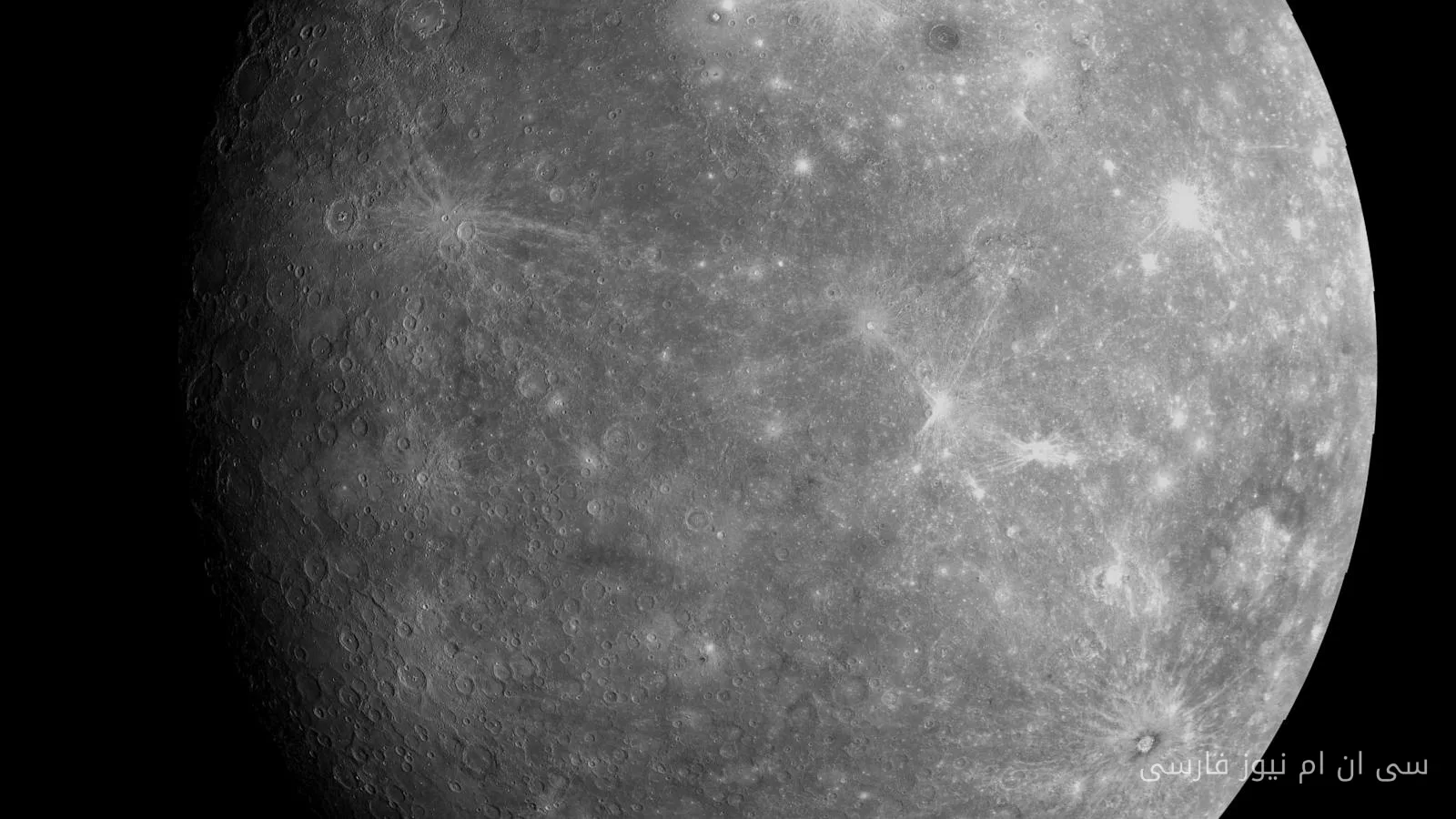
Mercury, the small and wrinkled closest neighbor to the sun, is currently under new scientific scrutiny that indicates this planet may be shrinking at a rate greater than scientists had imagined. These findings were recently published in a comprehensive study and have attracted researchers' attention.
Why is Mercury shrinking?
This research shows that Mercury is undergoing geological processes due to the gradual loss of its internal heat and is continuously contracting. This contraction may be due to tectonic activities and changes in the planet's internal structure. In particular, researchers are concerned that changes in Mercury's internal structure could lead to the formation of earthquakes and other natural phenomena.
Mercury, known as one of the smallest planets in the solar system, has undergone significant changes throughout its geological history. But the question now arises: could these changes have deeper impacts on other planets and even on Earth?
Potential implications of these findings
Although Mercury is currently considered a safe planet for human life, these changes could indicate more complex processes in the solar system. Some scientists believe that this information could help better understand the history of planets and how they formed.
Thus, research on Mercury has become a hot topic in the scientific world. Is it possible that in the future, this planet, smaller than currently imagined, will point to new secrets about the structure and history of the solar system?