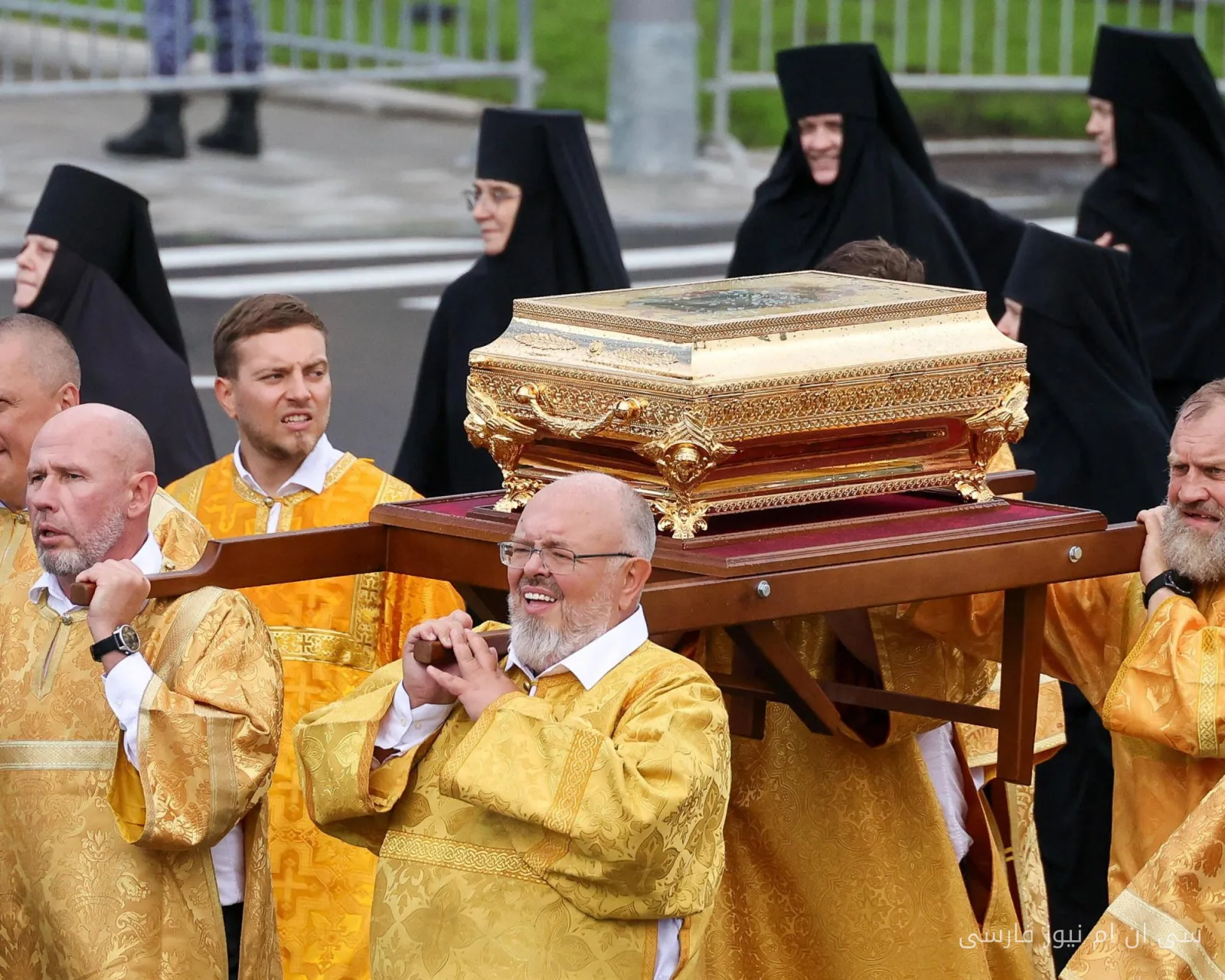
In a controversial move, the Russian Orthodox Church has sent part of the right hand of Dmitry Donskoy, a medieval prince, to the front lines of the war in Ukraine. This prince is revered in Russian history for his victory over the Mongol invasion in 1380. The sending of these remains is justified as a means to "boost the morale" of Russian soldiers and assist them in their path to victory in the war in Ukraine.
The Link Between Religion and War
This action clearly demonstrates the intersection of religion and politics in contemporary Russia. The Orthodox Church, as a religious institution, continues to play its role in modern wars alongside the state, attempting to strengthen nationalist sentiments among the people and soldiers by using historical symbols. Sending the remains of a historical figure to the front lines is seen as a form of honoring national history and culture.
In today's world, where wars are increasingly becoming cultural and ideological battles, such actions can be viewed as tools to justify war and enhance national spirit among soldiers and the public. But can this way of using history and religion truly be effective in achieving victory on the battlefield? Or is it merely a political display to justify military actions?
Analyzing the Consequences
The transfer of Dmitry Donskoy's remains to the front lines is analyzed not only as a religious act but also as a political maneuver. This move could fuel nationalist sentiment in Russia, but it may also bring about domestic and international criticism. Can this action help strengthen national unity in a war-torn country, or will it lead to increased social and political tensions?
Ultimately, this action illustrates how history can be utilized in the realm of politics and war, raising questions about the relationship between religion, history, and war in the contemporary world.