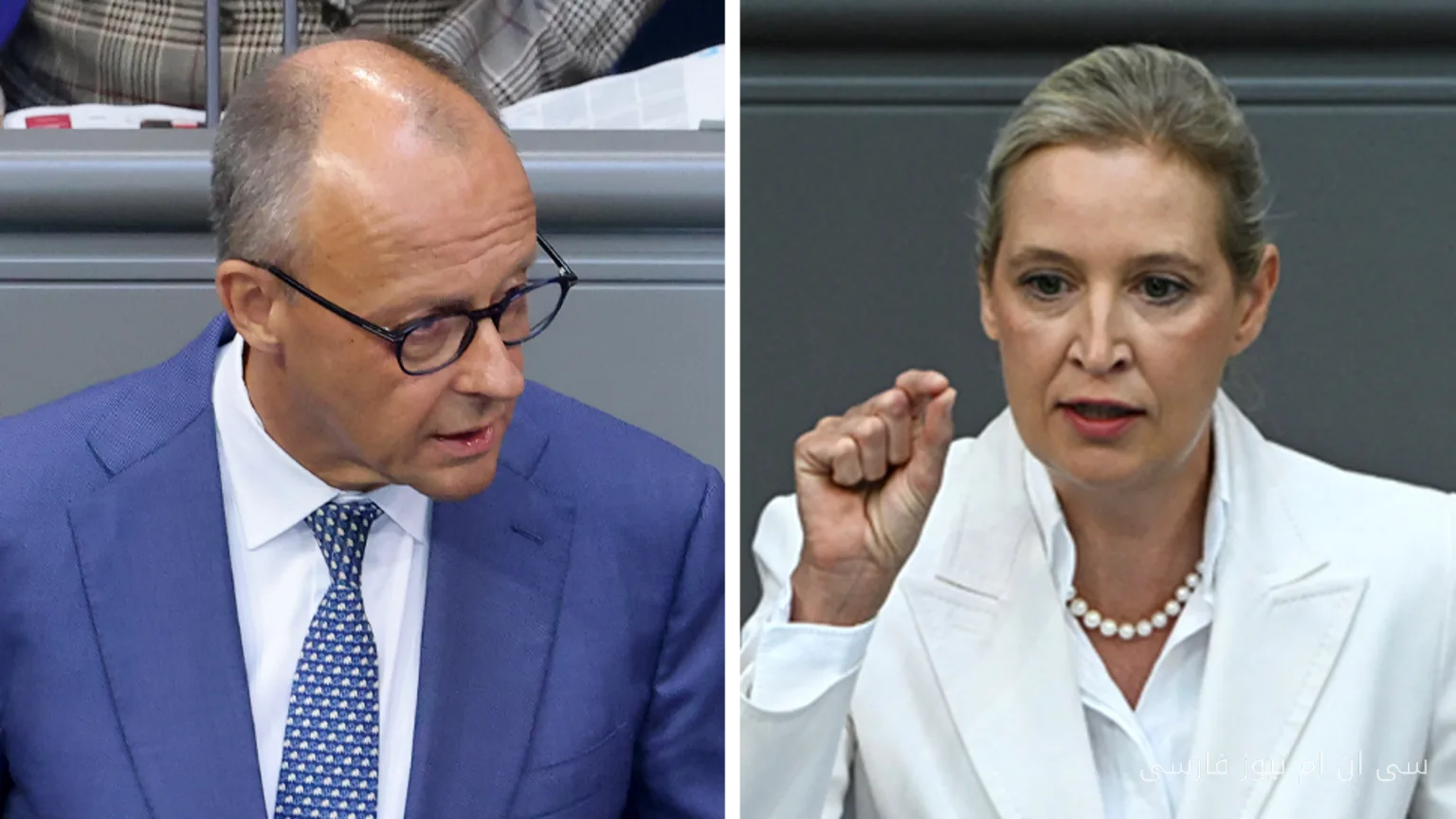
Following the recent victory of the far-right AfD party in the elections, a tense debate took place between the Chancellor of Germany and the leader of this party. Merz, the Chancellor of Germany, strongly criticized the immigration policies of Alice Weidel, the leader of the AfD, accusing her of implementing policies that could lead to ethnic cleansing.
Political Tensions in Germany Have Reached Their Peak
This debate is recognized as one of the hottest and most serious political discussions in German history. Merz, criticizing Weidel's immigration policies, clearly stated that these policies not only harm the German society but could also have serious consequences for the country's future. He specifically pointed out the dangers that may arise from the refusal to accept skilled immigrants.
In response, Weidel attempted to explain her position in defense of her immigration policies, presenting them as solutions to the country's economic problems. However, Merz firmly reminded her that these approaches are not only incorrect but dangerous, and could lead to division and discord in society.
What Will Be the Consequences of This Debate?
Given the current political climate in Germany, it seems that this debate could serve as a turning point in the parties' approaches to each other. Many analysts believe that with the increasing influence of the AfD, other parties must adopt stronger positions on social and economic issues to defend their standing.
Ultimately, this debate and its reactions may indicate the future political developments in Germany. Will the parties be able to achieve unity to combat extremism, or will tensions continue to persist?